Bundle of Holding: Forged 3

Dec. 8th, 2025 02:53 pm
james_davis_nicoll: (Default)
[personal profile] james_davis_nicoll


The third array of recent standalone tabletop roleplaying games using the Forged in the Dark rules system based on John Harper's Blades in the Dark from One Seven Design Studio.

Bundle of Holding: Forged 3
[personal profile] james_davis_nicoll


Did you miss these books the first time around? Good news!

Five Freshly Reprinted SFF Books and Series
[personal profile] james_davis_nicoll


Six works new to me: four fantasy, one horror, and one SF (also ttrpg). Four are arguably series.

Books Received, November 29 — December 5


Poll #33929 Books Received, November 29 — December 5
Open to: Registered Users, detailed results viewable to: All, participants: 17


Which of these look interesting?

View Answers

New Edge Sword & Sorcery Magazine: Volume I, Number 5 edited by Oliver Brackenbury (December 2025)
3 (17.6%)

New Edge Sword & Sorcery Magazine: Volume I, Number 6 edited by Oliver Brackenbury (December 2025)
2 (11.8%)

New Edge Sword & Sorcery Magazine: Volume I, Number 7 edited by Oliver Brackenbury (December 2025)
2 (11.8%)

Black River Ruby by Jean Cottle (January 2026)
5 (29.4%)

The Flowers of Algorab by Nils Karlén, Kosta Kostulas, and Martin Grip (January 2026)
6 (35.3%)

Headlights by C J Leede (June 2026)
2 (11.8%)

Some other option (see comments)
0 (0.0%)

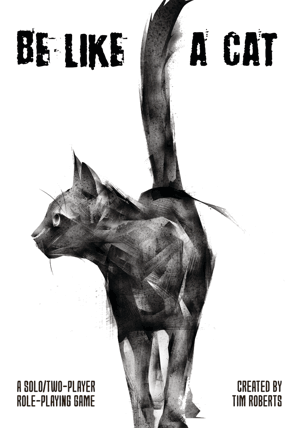
Cats!
13 (76.5%)

[personal profile] kiya
Dramatis Personae

Viepuck, quiet due to player absence
Izgil, unfortunately the only one who can see in the dark
Celyn, who did a lot of rogueing
Robin, prepared to do a great deal of dragon-thumping

When we concluded last session, we were about to be attacked by a dragon.

So we set up for that. )


(Combat sessions are easy to summarize.)

Well, this was weird

Dec. 7th, 2025 10:18 pm
james_davis_nicoll: (Default)
[personal profile] james_davis_nicoll
Another unconscious person on public transit. This guy just seemed to be terribly tired, but when he slumped over, he knocked his stuff on the floor. Several times. I kept putting his stuff back, and mentioned him to the drive on my way out.

Space Skimmer by David Gerrold

Dec. 7th, 2025 08:51 am
james_davis_nicoll: (Default)
[personal profile] james_davis_nicoll


Who killed the empire? More importantly, what does it take to get men to process their emotions?

Space Skimmer by David Gerrold

(no subject)

Dec. 6th, 2025 09:18 am
james_davis_nicoll: (Default)
[personal profile] james_davis_nicoll


Geneviève Bergeron (born 1968; aged 21), civil engineering student
Hélène Colgan (born 1966; aged 23), mechanical engineering student
Nathalie Croteau (born 1966; aged 23), mechanical engineering student
Barbara Daigneault (born 1967; aged 22), mechanical engineering student
Anne-Marie Edward (born 1968; aged 21), chemical engineering student
Maud Haviernick (born 1960; aged 29), materials engineering student
Maryse Laganière (born 1964; aged 25), budget clerk in the École Polytechnique's finance department
Maryse Leclair (born 1966; aged 23), materials engineering student
Anne-Marie Lemay (born 1967; aged 22), mechanical engineering student
Sonia Pelletier (born 1961; aged 28), mechanical engineering student
Michèle Richard (born 1968; aged 21), materials engineering student
Annie St-Arneault (born 1966; aged 23), mechanical engineering student
Annie Turcotte (born 1969; aged 20), materials engineering student
Barbara Klucznik-Widajewicz (born 1958; aged 31), nursing student

2025 in writing (my stuff)

Dec. 5th, 2025 01:26 pm
mrissa: (Default)
[personal profile] mrissa
 

I'll be doing my usual recommendations for short stuff other people have read at the end of December, when I've had a chance to read the things that are still coming out in December, but I think I've seen the last of my new publications for the year, so here's what I've been up to!

...a year turns out to be a long time. One of the reasons I think it's good to do these year-in-review posts is that the sense of "oh wait, was that this same year???" is strong. I feel like my tendency to put things I've accomplished in the rearview and focus on the next thing is generally really useful to me, but it does tend to lead to a "what have you done lately" mindset. When it turns out that what I have done lately is a pile of stories. There were more SF than fantasy stories, which surprised me, it didn't feel that way...more on why I think that is in a minute. In any case, here's the 2025 story list:

The Year the Sheep God Shattered (Diabolical Plots)

Her Tune, In Truth (Sunday Morning Transport)

If the Weather Holds (Analog)

Disconnections (Nature Futures)

The Things You Know, The Things You Trust (If There's Anyone Left)

All I Got Was This Lousy T-Shirt (Lightspeed)

Things I Miss About Civilization (Nature Futures)

A Shaky Bridge (Clarkesworld)

What a Big Heart You Have (Kaleidotrope)

And Every Galatea Shaped Anew (Analog)

The Crow's Second Tale (Beneath Ceaseless Skies)

Advice for Wormhole Travelers (The Vertigo Project)

She Wavers But She Does Not Weaken (The Vertigo Project)

The Torn Map (The Vertigo Project)

So yeah! Stories galore! And with a very satisfying variety of publishers, with the exception that The Vertigo Project was a focus of a lot of my attention this year. Which makes sense! It's a pretty big deal. All the poetry I had published this year was with The Vertigo Project as well, although I have a couple of poems ready to come out in 2026 from other places. Here's the list of poems:

Club Planet Vertigo (The Vertigo Project)

Greetings From Innerspace (The Vertigo Project)

On the Way Down (The Vertigo Project)

Preparation (The Vertigo Project)

The Nature of Nemesis (The Vertigo Project)

I only had one piece of nonfiction out this year, The Stranger Next Door: The Domestic Fantastic in Classic Nordic Children's Literature (Uncanny). But it's a topic that's very close to my heart, and I'm glad I had the chance to wallow in it. Er, I mean, share it with you.

I suppose the other thing that could be considered nonfiction is that I wrote journaling prompts to help people with vertigo process their vertigo experience through creative writing. I also wrote a group workshop format for the same general ideas, and I ran the first of those workshops in November. It was lovely and seemed to be very meaningful to the people involved--and that's one of the things that's nice about the facilitator (that is, me) being someone with vertigo, it meant that I was talking about our experiences rather than their experiences. The Vertigo Project has been the gift that keeps on giving all year, and there will be more of it yet in 2026. What a great thing to get to be involved with. I'm so pleased to have done this work with these people.

I was also a finalist for the Washington Science Fiction Association's Small Press Award, for one of 2024's stories, A Pilgrimage to the God of High Places. I got to go to Capclave and hang out with a bunch of friends and enjoy being a finalist.

I think the main reason that I felt like I was doing equal parts fantasy and SF this year is that I wrote approximately half each of two novels, one fantasy and one SF. Both are still going strong. We'll see where they take me. I'm also working on some more short work in both categories. While I published a lot more short SF, my biggest news in recent months is that I sold a fantasy novella to Horned Lark Press. A Dubious Clamor features harpies, politics, operettas, pastries, and complicated friendships, and it's forthcoming in 2026. A lot done this year, a lot to look forward to!

Tags:

New Worlds: A Brief History of Science

Dec. 5th, 2025 09:04 am
swan_tower: (Default)
[personal profile] swan_tower
In the beginning, there was the list.

Some of our oldest written texts are, in fact, just lists of things: types of trees, types of bird, that sort of thing. They may have been used for teaching vocabulary in writing, but they also serve as a foundational element for knowledge, one so basic that the average person today barely even thinks about it. But how can you learn about Stuff if you haven't first thought about what Stuff is out there?

The Onomasticon of Amenope goes a step further. Not only does this Egyptian text from three thousand years ago set out to help the student learn "all things that exist," but it organizes them into loose categories, summarized by Alan Gardiner as things like "persons, courts, offices, occupations," "classes, tribes, and types of human being," and "the towns of Egypt." This is a vital step in scholarship, not only in the past but the present: even today, we wrestle with questions of categorization and how best to group things, because there's no single "right" answer. What system is best depends on what you want to use it for, and how you approach this issue reveals a lot about where your priorities are. (Think of a grocery store: what's revealed by having dedicated shelving for things like "Hispanic foods" and "Asian foods," and what items could arguably be placed among them but aren't.)

Another very early category of scholarship is travel writing or travelers' reports -- basically, accounts of ethnography and natural history covering foreign lands. These have often been highly fanciful, reporting things like people with no heads and their faces in their stomachs, but why? It's hard to say for sure. In some cases the information probably got garbled in the transmission (think of the game "telephone"); in others, the observer may have misunderstood what they were seeing; sometimes the teller deliberately jazzed up their material, and sometimes they made it up out of whole cloth, perhaps to support whatever larger point they wanted to make. From our modern perspective, it often looks highly unreliable . . . but it's still a key element in laying the foundations of knowledge.

Once you have foundations, you can start building upon them. Much ancient scholarship takes the form of commentaries, works that aim to explain, expand upon, or contradict existing texts, often by pointing at another text that says something different. You also get textual criticism, which is our modern term for a practice going back at least two thousand years: when works are copied by hand, there is significant need for scholars comparing the resulting variants and attempting to identify which ones are the oldest or most accurate. Basically, undoing that game of telephone, lest things get garbled beyond comprehension.

What you don't tend to get -- not until more recently -- is research as we think of it now. There absolutely were people who attempted to explain how the world worked, but they largely did so by sitting and thinking, rather than by actively observing phenomena and testing their theories. That doesn't mean they weren't curious about things, though! How the heck does vision work, or smell? Why do objects fall down? What makes the planets seem to "move backward" through the sky, rather than following a straight path? What engenders disease in the body? People have been trying to answer these questions for thousands of years. The pop culture image of pre-Enlightenment science is that people just said "it's all because of the gods" and stopped there, but in truth, pre-modern people were very interested in finding more specific answers. Yes, it was all due to the gods, but that didn't mean there weren't patterns and rules to the divine design. Even medieval Christians, often assumed to be uninterested in or afraid of asking questions (lest the Church come down on their heads), argued that better understanding the mechanics of God's creation was an expression of piety, rather than incompatible with it.

But it's true that they largely didn't conduct experimentation in the modern, scientific method sense. Science and philosophy were strongly linked; rather than aiming to dispassionately observe facts, much less formulate a hypothesis and then see whether the data bore it out, people sought explanations that would be in harmony with their beliefs about the nature of existence. Pre-Copernican astronomy was shaped by philosophical convictions like "the earth we humans live on is supremely important" and "circles are the most perfect shape, therefore the one ordained for the movement of heavenly bodies" -- because why would divine entities arrange things any other way?

Scholarship and science were also strongly shaped by respect for past authority, to the point where luminaries like Aristotle were practically deified. (Or literally deified, in the case of the Egyptian chancellor Imhotep.) It marked a tremendous sea change when the English Royal Society in the seventeenth century adopted as its motto Nullius in verba, loosely translated as "take nobody's word for it." They resolved not to accept the wisdom of yore, not until it had been actively tested for veracity . . . and if it failed to hold water? Then out it went, regardless of who said it and how long it had been accepted as dogma.

This is, of course, a highly simplified view of the history of science. Not everything proceeded at the same pace; astronomy, for example, has an incredibly long history of precise observation and refinement of instrumentation, because correctly understanding the sky was vital to things like the creation of calendars, which in turn affected everything from agriculture to taxation. Biology, meanwhile, spent a lot longer relying on anecdata. But it's vital to remember that things which seem completely obvious to us are only so because somebody has already done the hard work of parsing the mysteries of things like the circulation of blood or the chemistry of combustion, which in fact were not obvious at all.

And this opens an interesting side door for science fiction and fantasy writers. The history of science is littered with theories eventually proved incorrect -- but what if they weren't wrong? Richard Garfinkle's novel Celestial Matters operates in a cosmos where Aristotelian biology and Ptolemaic astronomy are the reality of things, and develops its story accordingly. There's a whole Wikipedia list of superseded scientific theories, which could be fodder for story ideas! (But tread carefully, as some of those theories have pretty horrific implications, especially when they have to do with people's behavior.)

It's also worth thinking about what theories we hold today will look hilariously obsolete in the future. We like to think of ourselves as having attained the pinnacle of science and everything from here on out is just polishing the details, but you never know when an Einstein is going to come along and overturn the status quo with a new, deeper explanation of the facts. Of course none of us know what those future theories will be -- if we did, we'd be the Einsteins of our generation! But if you can spin a convincing-sounding foundation for your theory, you can present the reader with a world that contradicts what we think we know today.

Patreon banner saying "This post is brought to you by my imaginative backers at Patreon. To join their ranks, click here!"

(originally posted at Swan Tower: https://is.gd/jG7X6K)

eldering cat

Dec. 4th, 2025 01:27 pm
jazzfish: Alien holding a cat: "It's vibrating"; other alien: "That means it's working" (happy vibrating cat)
[personal profile] jazzfish
Took Mr Tuppert in to the vet today for his annual vaccines. Apparently when you get a rabies shot they give you a cute lil tag. I may put that on his collar, Just In Case. The odds of him getting out are basically nil but why take chances.

He's got a heart murmur, but it looks like that came up last time, and it's not gotten any worse, so that's just a Thing That Exists. Between that, the one tooth that the vet's been warning me about since he arrived, and what might be early-stage arthritis, this is a cat that is made of Problems (But Not Yet). I'm okay with that. Chaos started showing wear at about this point (thirteen-ish) as well, and he got another four years after that.

I did have a moment of "oh no" when the vet-tech took him to the back for shots and blood-drawing. Nothing real or serious, just the sudden realisation that I'm not nearly ready for him to go away, to be taken into a room by a kind and gentle tech and not come back out again. Of course I'll be there when it happens, this time, but still.

When we got home I gave him a little bit of tunafish, and filled up his treat-puzzle with treats. I don't think he's gotten -all- of them yet but he certainly spent some good time snuffling and crunching. Currently he is sacked out on the bed Recovering. Seems fair.
Tags:
[personal profile] james_davis_nicoll


Cleric Chih's quest to record the tragic history of a famine succeeds all too well.

A Mouthful of Dust (Singing Hills, volume 6) by Nghi Vo
Tags:
[personal profile] james_davis_nicoll


This new Worlds Without Number Bundle presents Worlds Without Number, the tabletop fantasy roleplaying game of far-future sword-and-sorcery adventure from acclaimed designer Kevin Crawford of Sine Nomine Publishing.

Bundle of Holding: Worlds Without Number
[personal profile] james_davis_nicoll


Having saved hapless human Tully from the kif, hani star captain Pyanfar Chanur is faced with the consequences of saving hapless human Tully from the kif.

Chanur’s Venture (Chanur, volume 2) by C J Cherryh

Absolutely fantastic

Dec. 2nd, 2025 08:07 am
mrissa: (Default)
[personal profile] mrissa
 New essay out today in Uncanny Magazine! The Stranger Next Door: The Domestic Fantastic in Classic Nordic Children's Fantasy. Want to read me geeking out about Pippi, Nils, and the Moomins? Here we are, it's a different kind of cozy!
Tags:

The future!

Dec. 1st, 2025 11:43 pm
james_davis_nicoll: (Default)
[personal profile] james_davis_nicoll
Tremble at the majesty of an AI designed house.

Read more... )

Books read, late November

Dec. 1st, 2025 07:20 pm
mrissa: (Default)
[personal profile] mrissa
 

Sam Bloch, Shade: The Promise of a Forgotten Natural Resource. Interesting natural and social history--and present assessment--of the uses and needs of shade in sunny climates. Very much the sort of environmental study we need more of. Yay for this weird little book.

Meihan Boey, The Formidable Miss Cassidy. Structurally slightly odd but extremely good. "Some weirdos make friends; hijinks ensue" is one of my favorite shapes of plot, all the more so when there's more than one culture and a bunch of magic stuff going on. More from this author please.

Joseph J. Ellis, Revolutionary Summer: The Birth of American Independence. This is a good introductory book if you haven't already read a lot of stuff about the lead-up to the American Revolution. It's not actually one of the ones I'd put very high on my list if you have, but not everyone has.

Martín Espada, Jailbreak of Sparrows. I feel like these were longer and less punchy than his previous poems, but that could be genuine or could be a result of my own mood, hard to guess without more intense study. "Not my favorite Espada collection" is still a pretty good thing to be.

Margaret Frazer, The Stone Worker's Tale. Kindle. This is another of the mystery short stories in the same continuity as her novel series, slight but entertaining as most of them are. Sometimes you can watch mystery authors try to figure out some twist that will entertain them to write, and I think this was one of those times.

Howard W. French, The Second Emancipation: Nkrumah, Pan-Africanism, and Global Blackness at High Tide. This is a good place to go deeper on recent Ghanan history but also a good place to start if you don't feel like you know very much about 20th century West Africa. A very interesting read.

Greg Grandin, America, América: A New History of the New World and Kissinger's Shadow: The Long Reach of America's Most Controversial Statesman. I got interested in the first of these when I saw it in a bookstore, and it did not disappoint: it's a history of the US and Latin America, rather than focusing on the US's relationship with Europe as most such histories do. It was good enough that I requested the second one based on enjoying his work, and I'm not sure that "enjoy" is the right word for a whole book about Kissinger, but then I'm not sure it should be. Grandin's view of Kissinger is relentless, and I don't think he should have relented. And at least it's not terribly long, it doesn't make you spend more time with Kissinger than necessary to study his sociopolitical effects.

Adam Hochschild, Rebel Cinderella: From Rags to Riches to Radical, the Epic Journey of Rose Pastor Stokes. Hochschild is generally good, and I like to see closer-focus histories. Rose Pastor Stokes definitely is interesting enough for a whole book. I do feel like he wanted to be doing some things with her marriage as emblematic of things that didn't quite get there, but it's still worth the time.

Marina Lostetter, The Teeth of Dawn. The last in its series, and I finished it from momentum rather than enthusiasm for where the series went. I really liked the earlier ones, it's just this two-timeline narrative felt labored at points. I generally enjoy her ideas and writing and will be glad to see what else she does next.

Premee Mohamed, The First Thousand Trees. Another third volume. This one was a bit more genre-standard than its two predecessors, but well-executed on that, fitting it into the established worldbuilding and characters.

Trung Le Nguyen, Angelica and the Bear Prince. A sweet YA love story in graphic novel form. Cute to look at as well as cute storyline, won't take long.

Yasuhiko Nishizawa, The Man Who Died Seven Times. This is a time loop novel that's also a murder mystery, and I really liked that the looping character was attempting to prevent the murder in the process of solving it: how can I make this better. The twist in the ending was not entirely satisfying to me, and there was enough problematic alcohol use that even I, who don't usually flag that, feel like it's worth noting for people who really dislike that as an element in fiction.

Ellen Oh and Elsie Chapman, eds., A Thousand Beginnings and Endings. Retellings of Asian mythologies by Asian diaspora authors, somewhat varied but generally quite satisfying. I read this for book club, and it gave us a lot of happy fodder for discussion rather than the more annoyed kind we sometimes have.

Hache Pueyo, Cabaret in Flames. Discussed elsewhere.

Jonathan Slaght, Tigers Between Empires: The Improbable Return of Great Cats to the Forests of Russia and China. There's a lot about field work with Amur tigers in this. A lot. If you like that kind of nitty gritty about how the science gets done, good news, this is a book for you. I do like that sort of thing, so I was very pleased. My one complaint is that there is almost nothing about China and very little about the cross-cultural relationship work here. For having it in the subtitle, it's...really a Russian book. And that's okay! Just some clarity there.

Seamus Sullivan, Daedalus Is Dead. I thought this was going to be a completely different shape of thing, which is my fault and entirely on me. The cover and title made me think that Daedalus was going to be a metaphor. Nope! No metaphors here! Very literal retelling of Daedalus's experiences in life and afterlife! For some reason Sullivan decided that what he most wanted to do here was Daedalus as unreliable narrator in ways that have nothing at all to do with him as a technologist; there's stuff to be done with complicity in science/technology work, but very little of it was done here, most of Daedalus's flaws were...generic unpleasant dude flaws, I would say. It's written quite well, but I ultimately did not want to spend even a novella's worth of time with this character.

Ann Vandermeer and Jeff Vandermeer, eds., Sisters of the Revolution: A Feminist Speculative Fiction Anthology. Some very familiar, oft-reprinted stuff in here, plus some stuff I've never seen before. A very mixed bag, the full spectrum of my responses as well as the full spectrum of types of feminist SF.

Ellen Wayland-Smith, The Science of Last Things: Essays on Deep Time and the Boundaries of the Self. Wayland-Smith leans very heavily on similes in this essay collection, which often didn't work amazingly for me because the similes felt...fine? rather than genuinely illuminating. I feel like a cad saying that her best work was about her own mortality, but, well. Better than her worst work, I suppose? Still. This was fine enough but not a favorite.

Page generated Dec. 9th, 2025 02:34 am
Powered by Dreamwidth Studios