jazzfish: Jazz Fish: beret, sunglasses, saxophone (Default)
Tucker McKinnon ([personal profile] jazzfish) wrote2025-12-11 10:25 am
Entry tags:

at least it's not just me

From today's Ask A Manager update:
I am still job searching. It's extremely rough out there, and I have not been able to get very far in interviews for the same job I left at this company because I am so early career. I've been getting feedback from companies when they do not move forward with me that they just have more candidates with more experience, always.
Money is at least sorted for the short-term. Assuming I can in fact sell this place and find somewhere else to live, it's sorted medium-term as well. Beyond that, I refer you to John Maynard Keynes: "In the long run, we are all dead."

(Context makes that quote much more interesting than simple fatalism. Keynes was arguing with someone claiming that certain economic policies would make things worse in the short term but in the long run we'd all be much better off. Keynes believed strongly in fixing what we could now, an attitude I appreciate even when I have trouble implementing it. Can't have a better future if you can't get yourself into the future.)

Books on shelves, roof overhead, food in pantry, snoring cat. Breaking out the xmas stuff this weekend, I think. Could be worse.
james_davis_nicoll: (Default)
james_davis_nicoll ([personal profile] james_davis_nicoll) wrote2025-12-11 12:51 pm

John Varley (1947 - 2025)

Multiple sources report the death of SF author John Varley.
james_davis_nicoll: (Default)
james_davis_nicoll ([personal profile] james_davis_nicoll) wrote2025-12-11 08:28 am

Summer of Love (Zhu Wong, volume 1) by Lisa Mason


A 2567 blueblood travels back to the Summer of Love to save one very special 16-year-old.

Summer of Love (Zhu Wong, volume 1) by Lisa Mason
james_davis_nicoll: (Default)
james_davis_nicoll ([personal profile] james_davis_nicoll) wrote2025-12-10 02:13 pm
Entry tags:

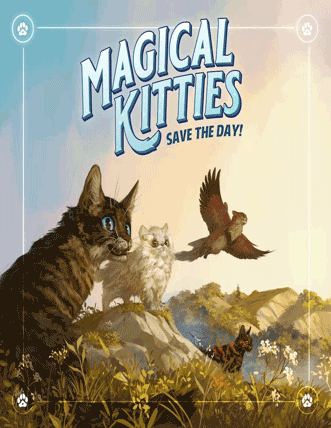
Bundle of Holding: Magical Kitties


Magical Kitties Save the Day, the all-ages introductory storytelling game from Atlas Games.

Bundle of Holding: Magical Kitties
james_davis_nicoll: (Default)
james_davis_nicoll ([personal profile] james_davis_nicoll) wrote2025-12-10 08:54 am

To The Warm Horizon by Choi Jin-Young (Translated by Soje)


Could safety from the global pandemic be found in desperate flight towards a land of banditry and violence?

To The Warm Horizon by Choi Jin-Young (Translated by Soje)
elisem: (Default)
Elise Matthesen ([personal profile] elisem) wrote2025-12-09 02:45 pm
Entry tags:

reading about writing, thinking about art

 So, just a few minutes ago in one place or another, I was reading what someone had to say about style. In the course of exploring a particular writer's habits and style, they said that they themselves weren't sure they knew what style was.

A long time ago, a sentence came into my possession that has been both comforting and humbling by degrees. It is this: "Style is what you can't help doing."

The comforting part is that if you can't help having style, or doing style, or whatever sort of verbing of style is accurate for you and your work, then you might as well stop any worrying about style and get on with the work. Saves a tremendous amount of time, really.

Thoughts?
james_davis_nicoll: (Default)
james_davis_nicoll ([personal profile] james_davis_nicoll) wrote2025-12-09 06:35 am
Entry tags:

A Witch's Guide to Magical Innkeeping by Sangu Mandanna


A depowered witch discovers she is just one zany scheme away from regaining her power... provided her estranged mentor does not intervene. Which of course he will.

A Witch's Guide to Magical Innkeeping by Sangu Mandanna
jazzfish: book and quill and keyboard and mouse (Media Log)
Tucker McKinnon ([personal profile] jazzfish) wrote2025-12-08 06:57 pm
Entry tags:

three from hong kong

The Cinematheque is doing a Hong Kong New Wave action series, which means I finally get to see a bunch of movies I've heard about for ages.

City On Fire )


Peking Opera Blues )


The Killer )
james_davis_nicoll: (Default)
james_davis_nicoll ([personal profile] james_davis_nicoll) wrote2025-12-08 02:53 pm
Entry tags:

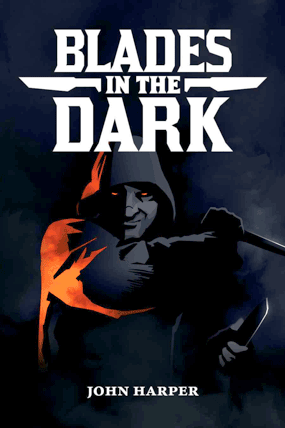
Bundle of Holding: Forged 3


The third array of recent standalone tabletop roleplaying games using the Forged in the Dark rules system based on John Harper's Blades in the Dark from One Seven Design Studio.

Bundle of Holding: Forged 3
james_davis_nicoll: (Default)
james_davis_nicoll ([personal profile] james_davis_nicoll) wrote2025-12-08 02:08 pm
Entry tags:

Five Freshly Reprinted SFF Books and Series


Did you miss these books the first time around? Good news!

Five Freshly Reprinted SFF Books and Series
james_davis_nicoll: (Default)
james_davis_nicoll ([personal profile] james_davis_nicoll) wrote2025-12-08 10:20 am

Books Received, November 29 — December 5


Six works new to me: four fantasy, one horror, and one SF (also ttrpg). Four are arguably series.

Books Received, November 29 — December 5


Poll #33929 Books Received, November 29 — December 5
Open to: Registered Users, detailed results viewable to: All, participants: 26


Which of these look interesting?

View Answers

New Edge Sword & Sorcery Magazine: Volume I, Number 5 edited by Oliver Brackenbury (December 2025)
3 (11.5%)

New Edge Sword & Sorcery Magazine: Volume I, Number 6 edited by Oliver Brackenbury (December 2025)
3 (11.5%)

New Edge Sword & Sorcery Magazine: Volume I, Number 7 edited by Oliver Brackenbury (December 2025)
2 (7.7%)

Black River Ruby by Jean Cottle (January 2026)
7 (26.9%)

The Flowers of Algorab by Nils Karlén, Kosta Kostulas, and Martin Grip (January 2026)
8 (30.8%)

Headlights by C J Leede (June 2026)
4 (15.4%)

Some other option (see comments)
0 (0.0%)

Cats!
21 (80.8%)

kiya: (gaming)
kiya ([personal profile] kiya) wrote2025-12-07 10:34 pm

[ gaming ] The Best-Laid Plans of Kobolds and Men

Dramatis Personae

Viepuck, quiet due to player absence
Izgil, unfortunately the only one who can see in the dark
Celyn, who did a lot of rogueing
Robin, prepared to do a great deal of dragon-thumping

When we concluded last session, we were about to be attacked by a dragon.

So we set up for that. )


(Combat sessions are easy to summarize.)
james_davis_nicoll: (Default)
james_davis_nicoll ([personal profile] james_davis_nicoll) wrote2025-12-07 10:18 pm

Well, this was weird

Another unconscious person on public transit. This guy just seemed to be terribly tired, but when he slumped over, he knocked his stuff on the floor. Several times. I kept putting his stuff back, and mentioned him to the drive on my way out.
james_davis_nicoll: (Default)
james_davis_nicoll ([personal profile] james_davis_nicoll) wrote2025-12-07 08:51 am

Space Skimmer by David Gerrold


Who killed the empire? More importantly, what does it take to get men to process their emotions?

Space Skimmer by David Gerrold
james_davis_nicoll: (Default)
james_davis_nicoll ([personal profile] james_davis_nicoll) wrote2025-12-06 09:18 am

(no subject)


Geneviève Bergeron (born 1968; aged 21), civil engineering student
Hélène Colgan (born 1966; aged 23), mechanical engineering student
Nathalie Croteau (born 1966; aged 23), mechanical engineering student
Barbara Daigneault (born 1967; aged 22), mechanical engineering student
Anne-Marie Edward (born 1968; aged 21), chemical engineering student
Maud Haviernick (born 1960; aged 29), materials engineering student
Maryse Laganière (born 1964; aged 25), budget clerk in the École Polytechnique's finance department
Maryse Leclair (born 1966; aged 23), materials engineering student
Anne-Marie Lemay (born 1967; aged 22), mechanical engineering student
Sonia Pelletier (born 1961; aged 28), mechanical engineering student
Michèle Richard (born 1968; aged 21), materials engineering student
Annie St-Arneault (born 1966; aged 23), mechanical engineering student
Annie Turcotte (born 1969; aged 20), materials engineering student
Barbara Klucznik-Widajewicz (born 1958; aged 31), nursing student
mrissa: (Default)
mrissa ([personal profile] mrissa) wrote2025-12-05 01:26 pm
Entry tags:

2025 in writing (my stuff)


I'll be doing my usual recommendations for short stuff other people have read at the end of December, when I've had a chance to read the things that are still coming out in December, but I think I've seen the last of my new publications for the year, so here's what I've been up to!

...a year turns out to be a long time. One of the reasons I think it's good to do these year-in-review posts is that the sense of "oh wait, was that this same year???" is strong. I feel like my tendency to put things I've accomplished in the rearview and focus on the next thing is generally really useful to me, but it does tend to lead to a "what have you done lately" mindset. When it turns out that what I have done lately is a pile of stories. There were more SF than fantasy stories, which surprised me, it didn't feel that way...more on why I think that is in a minute. In any case, here's the 2025 story list:

The Year the Sheep God Shattered (Diabolical Plots)

Her Tune, In Truth (Sunday Morning Transport)

If the Weather Holds (Analog)

Disconnections (Nature Futures)

The Things You Know, The Things You Trust (If There's Anyone Left)

All I Got Was This Lousy T-Shirt (Lightspeed)

Things I Miss About Civilization (Nature Futures)

A Shaky Bridge (Clarkesworld)

What a Big Heart You Have (Kaleidotrope)

And Every Galatea Shaped Anew (Analog)

The Crow's Second Tale (Beneath Ceaseless Skies)

Advice for Wormhole Travelers (The Vertigo Project)

She Wavers But She Does Not Weaken (The Vertigo Project)

The Torn Map (The Vertigo Project)

So yeah! Stories galore! And with a very satisfying variety of publishers, with the exception that The Vertigo Project was a focus of a lot of my attention this year. Which makes sense! It's a pretty big deal. All the poetry I had published this year was with The Vertigo Project as well, although I have a couple of poems ready to come out in 2026 from other places. Here's the list of poems:

Club Planet Vertigo (The Vertigo Project)

Greetings From Innerspace (The Vertigo Project)

On the Way Down (The Vertigo Project)

Preparation (The Vertigo Project)

The Nature of Nemesis (The Vertigo Project)

I only had one piece of nonfiction out this year, The Stranger Next Door: The Domestic Fantastic in Classic Nordic Children's Literature (Uncanny). But it's a topic that's very close to my heart, and I'm glad I had the chance to wallow in it. Er, I mean, share it with you.

I suppose the other thing that could be considered nonfiction is that I wrote journaling prompts to help people with vertigo process their vertigo experience through creative writing. I also wrote a group workshop format for the same general ideas, and I ran the first of those workshops in November. It was lovely and seemed to be very meaningful to the people involved--and that's one of the things that's nice about the facilitator (that is, me) being someone with vertigo, it meant that I was talking about our experiences rather than their experiences. The Vertigo Project has been the gift that keeps on giving all year, and there will be more of it yet in 2026. What a great thing to get to be involved with. I'm so pleased to have done this work with these people.

I was also a finalist for the Washington Science Fiction Association's Small Press Award, for one of 2024's stories, A Pilgrimage to the God of High Places. I got to go to Capclave and hang out with a bunch of friends and enjoy being a finalist.

I think the main reason that I felt like I was doing equal parts fantasy and SF this year is that I wrote approximately half each of two novels, one fantasy and one SF. Both are still going strong. We'll see where they take me. I'm also working on some more short work in both categories. While I published a lot more short SF, my biggest news in recent months is that I sold a fantasy novella to Horned Lark Press. A Dubious Clamor features harpies, politics, operettas, pastries, and complicated friendships, and it's forthcoming in 2026. A lot done this year, a lot to look forward to!

swan_tower: (Default)
swan_tower ([personal profile] swan_tower) wrote2025-12-05 09:04 am
Entry tags:

New Worlds: A Brief History of Science

In the beginning, there was the list.

Some of our oldest written texts are, in fact, just lists of things: types of trees, types of bird, that sort of thing. They may have been used for teaching vocabulary in writing, but they also serve as a foundational element for knowledge, one so basic that the average person today barely even thinks about it. But how can you learn about Stuff if you haven't first thought about what Stuff is out there?

The Onomasticon of Amenope goes a step further. Not only does this Egyptian text from three thousand years ago set out to help the student learn "all things that exist," but it organizes them into loose categories, summarized by Alan Gardiner as things like "persons, courts, offices, occupations," "classes, tribes, and types of human being," and "the towns of Egypt." This is a vital step in scholarship, not only in the past but the present: even today, we wrestle with questions of categorization and how best to group things, because there's no single "right" answer. What system is best depends on what you want to use it for, and how you approach this issue reveals a lot about where your priorities are. (Think of a grocery store: what's revealed by having dedicated shelving for things like "Hispanic foods" and "Asian foods," and what items could arguably be placed among them but aren't.)

Another very early category of scholarship is travel writing or travelers' reports -- basically, accounts of ethnography and natural history covering foreign lands. These have often been highly fanciful, reporting things like people with no heads and their faces in their stomachs, but why? It's hard to say for sure. In some cases the information probably got garbled in the transmission (think of the game "telephone"); in others, the observer may have misunderstood what they were seeing; sometimes the teller deliberately jazzed up their material, and sometimes they made it up out of whole cloth, perhaps to support whatever larger point they wanted to make. From our modern perspective, it often looks highly unreliable . . . but it's still a key element in laying the foundations of knowledge.

Once you have foundations, you can start building upon them. Much ancient scholarship takes the form of commentaries, works that aim to explain, expand upon, or contradict existing texts, often by pointing at another text that says something different. You also get textual criticism, which is our modern term for a practice going back at least two thousand years: when works are copied by hand, there is significant need for scholars comparing the resulting variants and attempting to identify which ones are the oldest or most accurate. Basically, undoing that game of telephone, lest things get garbled beyond comprehension.

What you don't tend to get -- not until more recently -- is research as we think of it now. There absolutely were people who attempted to explain how the world worked, but they largely did so by sitting and thinking, rather than by actively observing phenomena and testing their theories. That doesn't mean they weren't curious about things, though! How the heck does vision work, or smell? Why do objects fall down? What makes the planets seem to "move backward" through the sky, rather than following a straight path? What engenders disease in the body? People have been trying to answer these questions for thousands of years. The pop culture image of pre-Enlightenment science is that people just said "it's all because of the gods" and stopped there, but in truth, pre-modern people were very interested in finding more specific answers. Yes, it was all due to the gods, but that didn't mean there weren't patterns and rules to the divine design. Even medieval Christians, often assumed to be uninterested in or afraid of asking questions (lest the Church come down on their heads), argued that better understanding the mechanics of God's creation was an expression of piety, rather than incompatible with it.

But it's true that they largely didn't conduct experimentation in the modern, scientific method sense. Science and philosophy were strongly linked; rather than aiming to dispassionately observe facts, much less formulate a hypothesis and then see whether the data bore it out, people sought explanations that would be in harmony with their beliefs about the nature of existence. Pre-Copernican astronomy was shaped by philosophical convictions like "the earth we humans live on is supremely important" and "circles are the most perfect shape, therefore the one ordained for the movement of heavenly bodies" -- because why would divine entities arrange things any other way?

Scholarship and science were also strongly shaped by respect for past authority, to the point where luminaries like Aristotle were practically deified. (Or literally deified, in the case of the Egyptian chancellor Imhotep.) It marked a tremendous sea change when the English Royal Society in the seventeenth century adopted as its motto Nullius in verba, loosely translated as "take nobody's word for it." They resolved not to accept the wisdom of yore, not until it had been actively tested for veracity . . . and if it failed to hold water? Then out it went, regardless of who said it and how long it had been accepted as dogma.

This is, of course, a highly simplified view of the history of science. Not everything proceeded at the same pace; astronomy, for example, has an incredibly long history of precise observation and refinement of instrumentation, because correctly understanding the sky was vital to things like the creation of calendars, which in turn affected everything from agriculture to taxation. Biology, meanwhile, spent a lot longer relying on anecdata. But it's vital to remember that things which seem completely obvious to us are only so because somebody has already done the hard work of parsing the mysteries of things like the circulation of blood or the chemistry of combustion, which in fact were not obvious at all.

And this opens an interesting side door for science fiction and fantasy writers. The history of science is littered with theories eventually proved incorrect -- but what if they weren't wrong? Richard Garfinkle's novel Celestial Matters operates in a cosmos where Aristotelian biology and Ptolemaic astronomy are the reality of things, and develops its story accordingly. There's a whole Wikipedia list of superseded scientific theories, which could be fodder for story ideas! (But tread carefully, as some of those theories have pretty horrific implications, especially when they have to do with people's behavior.)

It's also worth thinking about what theories we hold today will look hilariously obsolete in the future. We like to think of ourselves as having attained the pinnacle of science and everything from here on out is just polishing the details, but you never know when an Einstein is going to come along and overturn the status quo with a new, deeper explanation of the facts. Of course none of us know what those future theories will be -- if we did, we'd be the Einsteins of our generation! But if you can spin a convincing-sounding foundation for your theory, you can present the reader with a world that contradicts what we think we know today.

Patreon banner saying "This post is brought to you by my imaginative backers at Patreon. To join their ranks, click here!"

(originally posted at Swan Tower: https://is.gd/jG7X6K)